The Context
What the museum suppresses about itself and about German racial history in the same decades it commemorates.
The Dokumentationszentrum presents German expulsion inside a frame of global forced migration. That frame has a shape: it reaches outward to other continents and other centuries, and it does not reach to the German streets, dormitories, and trains in which foreign workers were beaten, robbed, and killed. The story this page tells is not a digression. It is the story that would finish the sentence the museum starts.
The Vertragsarbeiter program
Between the 1970s and 1990 the German Democratic Republic signed bilateral labour agreements with Mozambique, Vietnam, Angola, Cuba, and others. The agreements were public, socialist, and fraternal in their language. Their operation was coercive.
Workers arrived under contracts that promised training and education. They were assigned to slaughterhouses, textile mills, chemical plants, and construction sites. Passports were confiscated on arrival. Housing was segregated into dormitories. Pregnancies triggered deportation. Between 40 and 60 percent of wages were withheld by the GDR government, formally as "remittances" owed to the sending states and in practice lost in inter-governmental ledgers.
After reunification most Vertragsarbeiter were expelled from Germany. Mozambican workers who returned home did so to find that the wages withheld in their names had not reached them. They became the madgermanes — the ones made in Germany — and have protested every Wednesday in central Maputo for decades, demanding the money owed.
Roughly 192,000 foreign nationals lived in the GDR at the fall of the Wall, with nearly 20,000 Mozambicans among them, according to DOMiD. The terminology was ideological: the GDR criticised the West German Gastarbeiter program as capitalist exploitation while running its own coercive scheme under the label Werktätige, documented in a Rosa Luxemburg Stiftung interview with filmmakers of the period. Mozambicans and Vietnamese had passports confiscated and replaced with temporary GDR identity cards. Border crossing was impossible. Dormitories did not admit visitors, above all German women.
New Lines Magazine reports that surviving madgermanes have occupied a park in central Maputo since the 1990s and still rally every Wednesday. Marcia Schenck's chapter in The Social Life of Socialism documents the racist attacks contract workers suffered, the slurs directed at East German women who dated African men, and the SED's formal anti-racism that did not touch the underlying attitudes. When state power fell away, those attitudes surfaced openly.
Manuel Diego, 1986
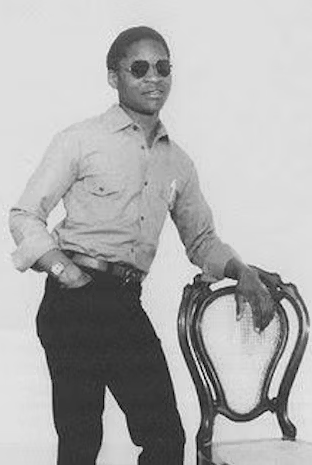
On a train in the GDR in 1986, Mozambican contract worker Manuel Diego was beaten unconscious by neo-Nazis and pushed out of a moving train, between the wheels and the rails. He was killed. His attackers were convicted under GDR law and released after reunification. His case is the narrative basis for Jalal Maghout's 2020 animated film Hier oben, bei den weißen Göttern, which gives this site its name.
The account comes from Ibraimo Alberto's testimony to Al Jazeera: Diego was 22, attacked by men in heavy boots, beaten unconscious, and pushed out the window between the wheels and the rails. Seven days were needed to recover the body. The attackers were prosecuted and jailed, and released after the Wall fell. The case is the narrative basis for Maghout's animated short, described in the FBW review of Hier oben, bei den weißen Göttern. The exact date and rail line are reported by Alberto but not independently verified in available sources.
Jorge Gomondai, 1991
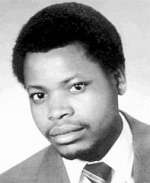
In Dresden on 6 April 1991, Mozambican contract worker Jorge Gomondai was assaulted on a tram by a group of young men and thrown from the moving vehicle. He died of his injuries several days later. He is recognised as the first documented fatal victim of racist violence in Saxony after reunification.
Gomondai was born in December 1962 in Manica province, Mozambique, and arrived in the GDR in the summer of 1981 under the February 1979 bilateral labour agreement between Mozambique and the GDR. He worked at the slaughterhouse of the VEB Fleischkombinat Dresden. He was attacked on tram line 6 on 6 April 1991 and died of head injuries at the Medical Academy Dresden. He is the first documented fatal victim of racist violence in Saxony after reunification. Documentation from the CPPD Network.
The pogroms
| Place | Date | What happened |
|---|---|---|
| Hoyerswerda | 17–23 September 1991 | Contract workers' and asylum seekers' housing attacked over five days. Residents evacuated under police guard to applause from onlookers. |
| Rostock-Lichtenhagen | 22–26 August 1992 | Mass attack on a sunflower-tiled apartment block housing Vietnamese former contract workers and Romani asylum seekers, staged in front of cameras and a watching crowd. |
| Mölln | 23 November 1992 | Arson attack. Killed: Bahide Arslan, Yeliz Arslan, Ayşe Yılmaz. |
| Solingen | 29 May 1993 | Arson attack on a Turkish family. Killed: Gürsün İnce, Hatice Genç, Gülüstan Öztürk, Hülya Genç, Saime Genç. |
| NSU murders | 2000–2007 | Ten victims in a national series. Institutional failures around the investigation continue the same trajectory. Investigated by the 1. and 2. Untersuchungsausschuss of the Bundestag (BT-Drucksache 17/14600 and 18/12950), searchable via dip.bundestag.de, with follow-on documentation at NSU-Watch. |
The continuity
The GDR maintained an official anti-racist, anti-fascist ideology while systematically denying foreign workers integration, language, residency, and safety. The BdV maintains an official reconciliation frame while systematically working to remove Holocaust context from the memory of German expulsion. Same structure: stated values that provide cover for the reproduction of racial hierarchy.
The continuity is not a metaphor. The contract workers and the asylum seekers who were attacked in the early 1990s were attacked in the same cities where, a generation later, the AfD won its first local victories. The political pipeline that runs from Steinbach's BdV presidency to her later public appearances with AfD-adjacent figures is not a defection. It is a trajectory.
Erika Steinbach joined the CDU in 1974 and served as BdV president from 1998 to 2014. In 1999 she co-proposed the Zentrum gegen Vertreibungen with Peter Glotz. Under her leadership the BdV founded the Preußische Treuhand in 2000, modeled on the Jewish Claims Conference, to pursue property restitution claims in Poland. In 2006 the BdV mounted the Berlin exhibition Erzwungene Wege, placing German expulsion alongside other forced migrations. Both moves are documented in Troebst 2012, pp. 397 and 406. In January 2017 Steinbach left the CDU and the CDU/CSU Bundestag faction over Merkel's refugee policy. In 2018 she became president of the Desiderius-Erasmus-Stiftung, the political foundation aligned with the AfD. In January 2022 she formally joined the AfD, citing Jörg Meuthen's departure from the party. The taz opening review of the Dokumentationszentrum already described her as mittlerweile parteilos und der AfD nahestehend.
The 2015 refugee crisis was the catalyst for the break with the CDU. The political orientation preceded it by decades. The 1999 Zentrum gegen Vertreibungen proposal, the 2000 Preußische Treuhand, the 2006 Erzwungene Wege exhibition, the 2018 foundation presidency, and the 2022 party membership sit on one line. The BdV presidency was not a precursor to the AfD turn. It was the same politics under an older label.
Hoyerswerda in Saxony, Rostock-Lichtenhagen in Mecklenburg-Vorpommern, and Chemnitz in Saxony name the same map. Contract workers and asylum seekers were attacked in Hoyerswerda in September 1991 and the town was afterwards declared ausländerfrei by the attackers (Wikipedia). Vietnamese former Vertragsarbeiter and Romani asylum seekers were attacked in Rostock-Lichtenhagen in August 1992. In August 2018 far-right mobs hunted foreigners through the streets of Chemnitz; openDemocracy traces the line from Hoyerswerda 1991 to Rostock 1992 to Chemnitz 2018. In the September 2024 state elections the AfD took its strongest-ever results in the same region and finished first in Thuringia; Foreign Policy called the outcome the strongest turnout for an extreme right-wing party in the postwar era. Weisskircher (2020) in The Political Quarterly connects the 1990s anti-immigrant violence in these states with the later AfD breakthrough in the same electorate.
This is the continuity Michael Rothberg's framework of multidirectional memory is built to name. Refusing context for one history blocks engagement with every history that shares the ground. The museum that refuses to connect German expulsion to the Nazi war of annihilation also refuses to connect the building it sits in to the Vertragsarbeiter violence of the 1980s, the pogroms of the early 1990s, and the electoral consolidation of the 2020s in the same country. The refusal is structural, not accidental. See Rothberg, Multidirectional Memory: Remembering the Holocaust in the Age of Decolonization (Stanford University Press, 2009).
For the primary sources behind this page, see sources.